10 World-Class Leadership Insights from Legendary Leaders

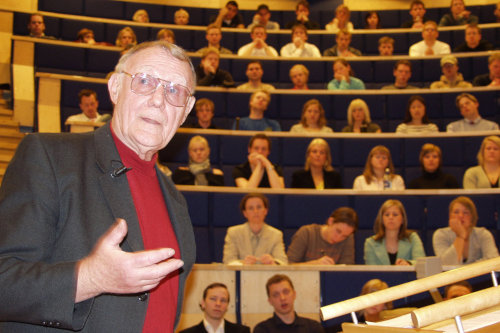
Ingvar Kamprad, Founder of IKEA

photo credit: CC0

Key Takeaways

  • Great leaders simplify complexity to make better decisions faster.
  • Culture is not a byproduct – it is a deliberate leadership choice.
  • Adaptability is often more valuable than raw intelligence.
  • Long-term thinking consistently outperforms short-term gains.
  • Leadership is measured by impact on people, not just performance metrics.
Continue reading

AI-Ready Leadership: What CEOs Must Learn to Lead in the Age of Artificial Intelligence

CEO adopting AI

Artificial intelligence is no longer a technical initiative – it is a leadership priority. For CEOs, the ability to understand and leverage AI is quickly becoming a defining factor of long-term success. Those who invest in AI upskilling today will be better equipped to drive innovation, manage risk, and lead their organizations into the future.

Key Takeaways

  • AI literacy is now a core leadership skill, not just a technical competency.
  • CEOs must understand both the capabilities and limitations of AI.
  • Strategic thinking around AI matters more than technical depth.
  • Building an AI-ready culture is as important as adopting AI tools.
  • Continuous learning is essential as AI evolves rapidly.
Continue reading

Steve Dulin: How Biblical Faith Can Transform Business Leadership

Purpose-driven leadership

Key Takeaways

  • Faith-driven leadership reframes business as a calling, aligning professional work with purpose and service.
  • The “business as mission” mindset integrates biblical values into decision-making, culture, and long-term strategy.
  • Three dimensions of faith integration – embodied, operationalized, and internalized – shape both visible and subtle workplace behaviors.
  • Servant leadership emphasizes stewardship, integrity, and supporting employees rather than exercising authority alone.
  • Companies that integrate faith-based principles often build stronger cultures, trust, and resilience beyond profit metrics.
Continue reading

How Boards Build Trust And Reduce Blind Spots

Board of Directors having a meeting

Key Takeaways

  • Boards play a critical role in building organisational trust because governance practices shape how decisions are made, risks are managed, and accountability is enforced across the organisation.
  • Blind spots often emerge between organisational functions where responsibilities overlap but ownership is unclear, creating risks that can go unnoticed until problems escalate.
  • Clear escalation rules help boards identify problems earlier by ensuring that significant operational, regulatory, or cultural issues are reported promptly and addressed transparently.
  • A strong speak-up culture improves visibility into potential risks because employees feel safe raising concerns and leadership responds with curiosity, fairness, and accountability.
  • Effective boards continuously test assumptions and operational realities through scenario planning, independent assurance, and honest reflection on board dynamics to reduce governance blind spots.
Continue reading

Restoration Specialists: What to Look for in a Contractor’s Leadership Team

Contractor's leadership team

Key Takeaways

  • Strong contractor leadership directly impacts organization, timelines, and project outcomes.
  • Clear supervision and defined roles reduce confusion and prevent costly delays.
  • Written documentation, structured pricing, and milestone-based payments signal discipline.
  • Transparent communication and predictable updates reflect internal coordination.
  • Licensing, insurance, and warranty follow-through help confirm long-term accountability.
Continue reading

Sean Unwin: Jim Collins’ Flywheel Effect and the Risks of the Doom Loop

The Flywheel effect in business management

Key Takeaways

  • Sustainable business success is built through consistent, disciplined execution rather than dramatic transformations.
  • The Flywheel Effect shows how small, repeated efforts compound into unstoppable momentum over time.
  • Strong companies focus on systems, processes, and culture – not just charismatic leadership.
  • The Doom Loop occurs when organizations repeatedly change direction without allowing strategies to mature.
  • Long-term value creation depends on focus, credibility, and commitment to a clear strategic path.
Continue reading

How to Lead: 6 Tips by Visionary Businesswomen

Whitney Wolfe Herd

Whitney Wolfe Herd, Founder, Executive Chair, and CEO of Bumble.
Photo credit: TechCrunch / Wikimedia Commons / CC BY 2.0 – cropped.

Key Takeaways

  • Great leaders intentionally design culture instead of inheriting it by default.
  • Building leverage and resilience matters more than chasing growth for its own sake.
  • Redefining success around sustainability creates healthier and stronger organizations.
  • Simplicity and clarity often scale better than complexity and feature overload.
  • Transformation and accountability are strategic advantages, not organizational costs.
Continue reading

Stephen Reeder: Lessons in Leadership Reflected Through Scouting Values

Scouting

Key Takeaways

  • Scouting emphasizes character, service, and self-reliance – values that closely mirror effective leadership principles.
  • The founding story of the Boy Scouts of America highlights how small acts of integrity can have lasting societal impact.
  • Scouting programs build confidence and resilience by helping young people overcome social, emotional, and physical challenges.
  • Personal achievement in Scouting often comes through mentorship, teamwork, and disciplined effort.
  • The stories demonstrate how values learned early in life can shape ethical leadership in business and community roles.
Continue reading

Father Horacio Medina: Exploring Aristotle’s Ethics and Moral Virtue

Ethics and moral values of Aristotle

Key Takeaways

  • Aristotle defines the highest human good as eudaimonia, or living and doing well across a complete life.
  • Human goodness depends on reasoning well and performing one’s proper function with excellence.
  • Virtue reflects stable character and disposition, not merely outward behavior or isolated actions.
  • Moral virtue is found in the mean between extremes, avoiding both excess and deficiency.
  • Other schools like the Cynics and Stoics developed different ethical views, but all emphasized reason and character.
Continue reading