
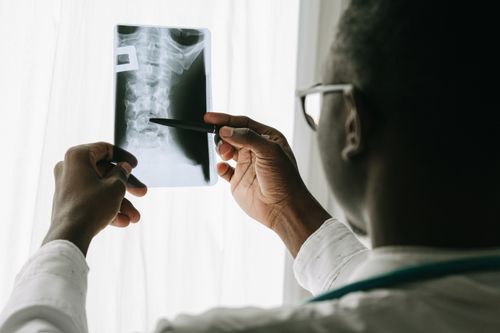
photo credit: Ivan S / Pexels
Key Takeaways
- Artificial intelligence and machine learning can make spinal cord stimulation more precise, personalized, and responsive to individual patient needs.
- AI can analyze clinical data to help physicians identify patients who may be more likely to benefit from spinal cord stimulation.
- Machine learning can support individualized stimulation programming by analyzing patient feedback, activity, symptoms, and device performance.
- Adaptive neuromodulation technologies can adjust stimulation based on movement, body position, and other signals to help maintain consistent pain relief.
- AI is designed to support rather than replace pain specialists, who remain responsible for clinical decisions and individualized patient care.
Ricky Sayegh, MD is a Bergen County, New Jersey-based physician whose career spans clinical care, utilization management, and health care administration. He currently practices as an interventional pain medicine physician, applying modalities such as neck and back injections and vein treatments to address chronic pain conditions. Dr. Sayegh completed his medical training at Mount Sinai School of Medicine and New York Medical College, later earning a physician executive MBA from the University of Tennessee with concentrations in population health, informatics, and health care finance. He also previously served as senior medical director at Centene/Fidelis and chief medical officer with Con Edison, where he supported employee wellness initiatives.
His combined clinical and administrative background provides useful context for understanding how emerging technologies, including artificial intelligence, are being applied to advance treatments such as spinal cord stimulation.
Advancing Spinal Cord Stimulation Through Artificial Intelligence
Artificial intelligence (AI) and machine learning are transforming healthcare by providing physicians with advanced tools to improve diagnosis, personalize treatment, and enhance patient outcomes. One area experiencing significant innovation is spinal cord stimulation (SCS), a well-established therapy used to manage chronic pain that has not responded to conservative treatments.
Spinal cord stimulation works by delivering mild electrical impulses to specific areas of the spinal cord through implanted electrodes. These electrical signals modify the way pain messages travel to the brain, reducing the perception of chronic pain without permanently altering the nervous system.
The therapy is commonly used for conditions such as failed back surgery syndrome, complex regional pain syndrome, chronic leg or back pain, peripheral neuropathy, and other nerve-related pain disorders. Because every patient experiences pain differently, determining the ideal stimulation settings has traditionally required repeated adjustments and careful follow-up. AI and machine learning are making this process more precise and efficient.
Improved patient selection before the procedure is performed is one of AI’s most valuable contributions to SCS. Machine learning algorithms can analyze large volumes of clinical information, including medical history, diagnostic imaging, pain characteristics, previous treatments, physical function, and patient-reported outcomes. By identifying patterns across thousands of cases, these systems may help physicians predict which patients are more likely to benefit from spinal cord stimulation.
AI also assists physicians in optimizing stimulation programming after device implantation. Traditional spinal cord stimulators often require multiple office visits to fine-tune pulse width, frequency, amplitude, and stimulation patterns until the patient achieves satisfactory pain relief. Machine learning systems can analyze patient feedback, activity levels, symptom patterns, and device performance to recommend adjustments that better match each individual’s needs.
Modern neuromodulation systems can collect information about device usage, stimulation settings, patient movement, and pain levels throughout daily life. Machine learning algorithms analyze this continuous stream of data to recognize trends that may indicate changing pain patterns or declining treatment effectiveness. Physicians can use these insights to modify therapy before symptoms become significantly worse, creating a more proactive approach to chronic pain management.
Unlike traditional systems that deliver fixed stimulation settings, adaptive devices have the potential to automatically adjust electrical output based on a patient’s body position, movement, or changing neurological signals. For example, stimulation intensity may be modified when a patient sits, stands, walks, or lies down to maintain consistent pain relief throughout the day. Machine learning enables these systems to continually learn from patient responses, allowing therapy to become increasingly personalized over time.
Another important application of AI involves improving clinical research and device development. Researchers can analyze extensive datasets from clinical trials and real-world patient experiences to better understand how different stimulation techniques perform across various pain conditions. Machine learning models may identify new treatment patterns, refine stimulation waveforms, and support the development of next-generation spinal cord stimulators that offer improved precision, efficiency, and patient satisfaction.
Intelligent software assists with medical documentation, insurance authorization, scheduling, remote patient monitoring, and follow-up communication. Automating these routine tasks allows physicians and healthcare teams to spend more time focusing on patient care, education, and treatment planning. Patients may also benefit from AI-powered mobile applications that help track symptoms, monitor recovery, remind them about follow-up appointments, and encourage active participation in their treatment.
Despite these promising advancements, AI is intended to complement but not replace the expertise of experienced pain specialists. AI provides valuable analytical support, but physicians remain responsible for interpreting data, selecting appropriate treatments, and ensuring that every patient’s care plan reflects their unique medical history, goals, and preferences. Human judgment continues to play a central role in achieving safe and effective outcomes.
As AI and machine learning technologies continue to evolve, their influence on spinal cord stimulation is expected to grow substantially. Future systems may provide even more sophisticated predictive modeling, automated therapy optimization, enhanced remote monitoring, and highly individualized stimulation strategies based on continuous learning.
FAQs
What is spinal cord stimulation?
Spinal cord stimulation (SCS) is a treatment for certain chronic pain conditions that uses implanted electrodes to deliver mild electrical impulses near the spinal cord. These signals can modify how pain messages are transmitted to the brain and may reduce the perception of chronic pain.
How is artificial intelligence being used in spinal cord stimulation?
AI and machine learning can analyze large amounts of clinical and patient-generated data to support patient selection, stimulation programming, treatment monitoring, and the development of more personalized neuromodulation strategies.
Can AI automatically adjust a spinal cord stimulator?
Some emerging adaptive neuromodulation technologies have the potential to adjust stimulation based on factors such as movement, body position, or neurological signals. These systems are designed to provide more responsive therapy while working alongside clinical oversight.
What are the potential benefits of AI-assisted spinal cord stimulation?
Potential benefits include more personalized treatment settings, improved monitoring, more efficient follow-up, better identification of treatment patterns, and greater insight into how patients respond to stimulation over time.
Will artificial intelligence replace pain specialists?
No. AI is intended to support physicians rather than replace them. Experienced pain specialists remain responsible for interpreting clinical information, selecting appropriate treatments, monitoring patients, and ensuring that care decisions reflect individual needs and preferences.
About Ricky Sayegh MD
Ricky Sayegh, MD, is a board-certified physician based in Bergen County, New Jersey, specializing in interventional pain management, with additional experience in emergency critical care and internal medicine. He earned his medical degree in 2000 and completed residency training at New York University/Mount Sinai Medical Center, later serving as chief medical resident. Dr. Sayegh holds a physician executive MBA from the University of Tennessee, Knoxville, and has held roles including senior medical director at Centene/Fidelis and chief medical officer with Con Edison. He is active with professional organizations such as the American College of Physicians and has completed volunteer medical missions with Doctors Without Borders.

